

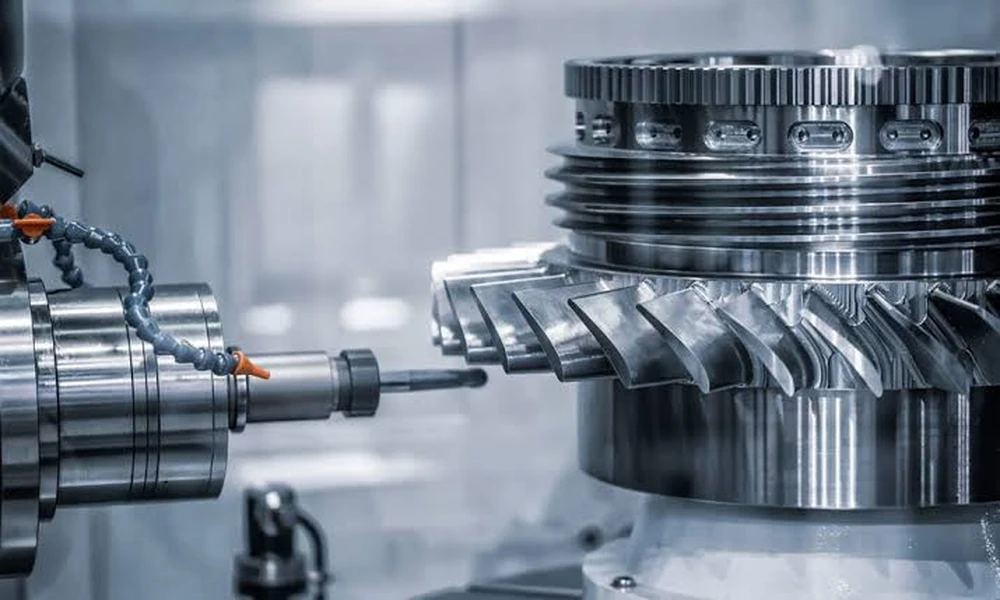
CNC machining (Computer Numerical Control Machining) is a cornerstone subtractive manufacturing technology that has transformed global hardware production. By utilizing digitized instructions to automate high-precision tools and industrial machinery, CNC machining enables the continuous, highly accurate, and repeatable fabrication of complex hardware. This article presents a comprehensive study of CNC machining-tracing its historical evolution, structural components, fundamental machining operations, core industry advantages, technical challenges, and future industrial trends-alongside how specialized global manufacturing partners like CS Rapid MFG deliver modern machining solutions.
History and Evolution of CNC Machining
The origins of CNC technology date back to the mid-20th century. During the 1940s and 1950s, the increasing demand for ultra-precise aviation parts led to the development of early Numerical Control (NC) systems. These early machines relied on punched paper tapes to encode positional vectors and control tool motion.
As computing architecture advanced during the 1970s, the manufacturing industry transitioned from hardware-limited NC systems to true Computer Numerical Control (CNC). Microprocessors enabled machines to store, process, and optimize complex toolpath code directly on internal memory, rendering machine setup far more flexible and efficient.
In early aerospace manufacturing, NC units produced relatively basic two-dimensional shapes. Today, multi-axis simultaneous CNC systems process complex superalloys into jet engine turbine blades with sub-micron tolerances, ensuring maximum aerodynamic efficiency and flight safety.
Structural Components of a CNC Machine
A industrial CNC machining platform relies on the seamless integration of several core systems:
Machine Tool Structure: The underlying physical bed and frame-housing the main spindle, worktables, linear guideways, and tool turrets (e.g., CNC milling machines, lathes, grinding centers, and multi-axis machining centers).
Control System (The Controller): The digital processing module that interprets G-code instructions and translates them into high-speed electrical signals. Modern controllers incorporate real-time error detection, thermal expansion compensation, and dynamic feed adjustment.
Drive System: Consists of high-torque servo motors, precision ground ball screws, and linear guideways. The drive system translates rotational motor energy into smooth linear or rotational motion along the X, Y, Z, A, B, and C axes.
Programming & CAD/CAM Interface: Dedicated software environments where engineers convert 3D CAD geometry into optimized tool paths, feed strategies, and machine-ready G-code.
Fundamental CNC Machining Processes
CNC machining encompasses several specialized operations tailored to specific geometries:
CNC Milling: High-speed rotary cutters remove stock from a fixed or multi-indexed workpiece to produce flat faces, slots, complex pockets, and 3D organic contours. It is vital for machining engine blocks, structural brackets, and mold cavities.
CNC Turning: The workpiece rotates at high speed while stationary cutting tools feed along its axes. Turning is ideal for symmetrical cylindrical components such as shafts, precision pins, bushings, and custom fittings.
CNC Drilling & Boring: Precise hole-making operations where tool depth, spindle speed, and chip evacuation are closely regulated-widely applied in electronic PCB fixtures and hydraulic valve blocks.
Precision Grinding: An abrasive finishing process used to achieve mirror-like surface finishes and tight dimensional tolerances for high-wear hardware such as bearings, gears, and linear shafts.
Key Advantages of CNC Machining
1. High Precision and Micro-Tolerances
CNC machining routinely yields strict manufacturing tolerances within ±0.005 mm. This capability is paramount in medical device fabrication (e.g., orthopedic implants and surgical handles) where proper fitment directly affects patient health.
2. High Production Efficiency and Throughput
Once verified, CNC programs run continuously with minimal human intervention. Automated tool changers and bar feeders maximize spindle runtime, drastically shortening turnaround times for high-volume consumer electronic components and automotive parts.
3. Superior Repeatability
Computer-directed toolpaths guarantee dimensional consistency across large-scale production runs, ensuring every batch meets the exact same specification.
4. Geometric Complexity
Multi-axis CNC equipment easily produces complex undercuts, deep channels, draft angles, and organic curves that cannot be achieved via traditional manual machining.
Challenges and Future Trends in CNC Machining
Operational Challenges
High initial capital investment for multi-axis machinery, CAD/CAM software licenses, and ongoing tool wear management can pose barrier entries for small operations. Furthermore, programming multi-axis machine paths demands skilled manufacturing engineers.
Emerging Trends
Automation and Smart Factories: Robotics integration (such as robotic arm loading/unloading) and AI-driven predictive maintenance allow true “lights-out” manufacturing.
Hybrid Manufacturing: Combining subtractive CNC machining with additive manufacturing (3D metal printing) to create complex internal cooling channels followed by ultra-precise CNC surface finishing.
Advanced Material Tooling: Diamond-coated, ceramic, and cermet tooling allow faster cut speeds and longer tool life when machining difficult materials like Inconel, Titanium, and Carbon Fiber composites.
End-to-End Machining Services by CS Rapid MFG
To overcome capital equipment limits and access advanced multi-axis technology, global hardware developers rely on specialized manufacturing partners like CS Rapid MFG (CS Mold Co., Limited).
Established in 2008 in Dongguan, China, CS Rapid MFG is an ISO 9001:2015 certified global supplier specializing in high-precision CNC Milling, CNC Turning, Sheet Metal Fabrication, Plastic Injection Molding, and Rapid Tooling.
Why Partner with CS Rapid MFG?
Advanced Multi-Axis Infrastructure: CS Rapid MFG’s 10,000+ sqm manufacturing plant houses over 80 high-precision CNC machines-including state-of-the-art Hermle and DUG 5-axis, 4-axis, and 3-axis CNC milling centers as well as high-precision CNC lathes.
Integrated DFM Reviews & Fast Turnaround: Every design submission receives a thorough Design for Manufacturability (DFM) review to optimize tolerances and lower unit costs. Rapid prototypes can be machined and delivered in as fast as 3 to 5 days.
Flexible Order Quantities: CS Rapid MFG offers complete volume flexibility with NO Minimum Order Quantity (NO MOQ)-supporting single prototype units up to full-scale production runs.
Complete Quality Assurance: Strict adherence to ISO quality protocols, standard material certifications, dynamic CMM inspection, and a full suite of surface finishing treatments.
To request a 12-hour instant quote or upload 3D CAD files for engineering review, visit the official platform at CS Rapid MFG.
Conclusion
CNC machining remains a core technology driving modern product development and industrial automation. From its historical origins in punched-tape NC machines to multi-axis smart machining centers, CNC technology provides the speed, precision, and material versatility needed to power aerospace, automotive, medical, and consumer electronics innovation. By leveraging contract manufacturing specialists like CS Rapid MFG, organizations worldwide can turn complex digital concepts into high-performance physical hardware efficiently.
